in this interview.
- Sloping sanitary sewer pipes in Revit, one of the toughest everyday tasks in MEP coordination, and what it's like to hand that over to AI
- Why the best results come from treating AI like a colleague: describe the task the way you'd ask a coworker, then narrow it down step by step
- The easiest workflows to start with, like creating sheets for specific systems across every level of a building
- Why a blank chat window can feel intimidating, and how working in small steps teaches you to instruct AI better
- His first Autodesk University, and what it's like to be surrounded by thousands of people who care about technology in the industry
transcript.
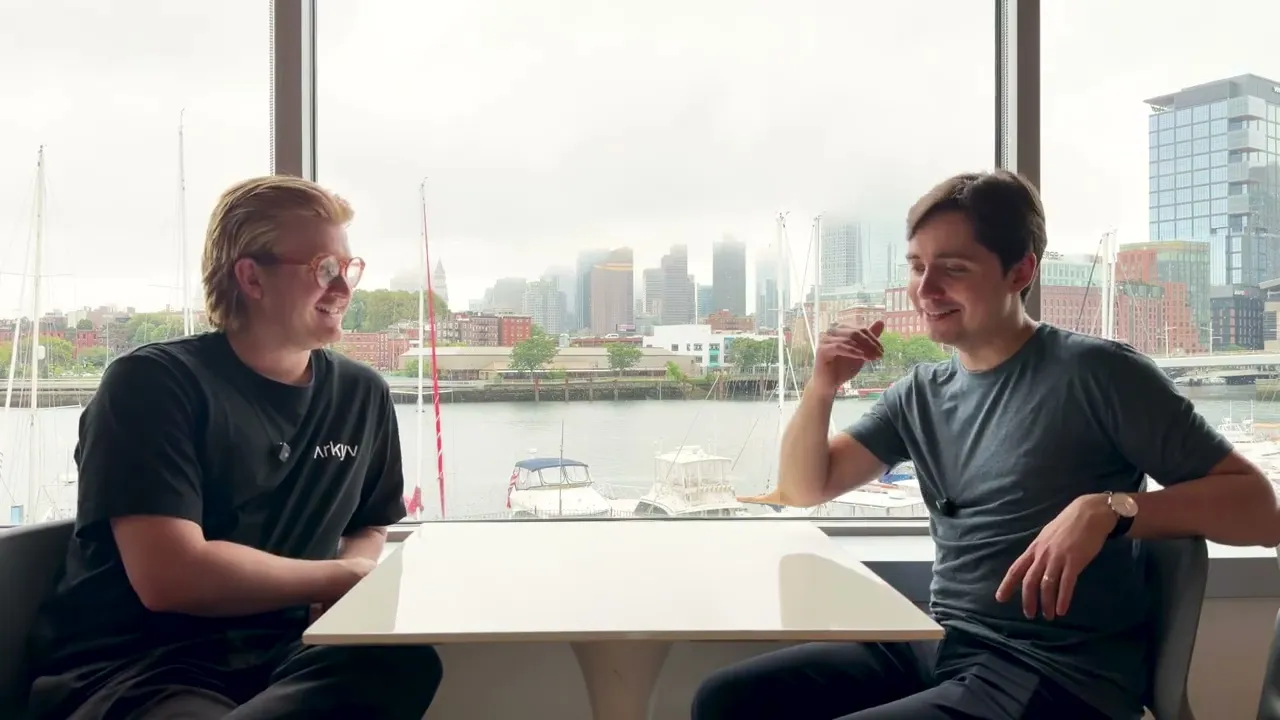
0:00 Yeah. Awesome. So now we're rolling. So we're here at AU. And I have the pleasure of having Nathen here with me. We met What is it now? Two days ago. Nathen? Yes. And we've been. Yeah, interacting a lot. I'd say, you know, the past couple of days, like you've been by our, booth. A couple of times. You want to introduce yourself and tell the people about what it is that you do. Yeah. So I'm Nathen Jurgens, I'm from Arkansas, and I work for a company called Nabholz. And I'm a VDC specialist, which stands for Virtual Design and Construction. Yeah. So anytime there's any MEP, I make sure that there's clash resolution to all of that.
0:38 And, try to coordinate the model the best I can before it goes out to the field. Yeah. And we've had a lot of fun the past couple of days. And, like, you came by our booth the first time. And so I think we had this sign, whereas like, we had some examples of workflows that you could automate and this kind of caught your eye. And then you, you ended up staying for a while and you ended up also like really helping us understand capabilities better and these kind of things. And we were just like really pushing it to its limits. Do you want to just like mention briefly, some of the things that you did that kind of like made you think that like this is AI for Revit, like especially Arkyv in this case this could like really be something, this is of interest to you.
1:22 Yeah I think the coolest thing that I saw was being able to isolate like the sanitary sewer. And once you isolated it you could ask it to make sure that it knew the slope that it was at. So if there wasn't a pipe that was sloped, you could ask it and it would slope the pipe for you. And that's kind of a battle in my world, anyways, that sloping pipe in Revit is not a very easy task. It always disconnects when you don't want it to. And it was very efficient. And even with the program, it did disconnect one of the assemblies. And then it reconnected itself after it figured out that something was wrong with it.
1:59 Yeah. Yeah. That's another big thing of the AI, right? The kind of trial and error approach, which is pretty fun to see in Revit. Like it's actually pretty fun to just take a passive stance and give it like, you know, kind of push it to the limit and try to like sit and watch how it solves things. Right. You enjoy that process as well right. Yeah. And it gave a bunch of feedback. And it would do things where, you know, you might not ask it a certain question or be clear with your prompt, and it would ask you and just make sure like, hey, is that actually what you wanted to do? Yeah. And a few times I was like, well, that's actually not what I wanted to do. And it asked that question and was able to figure it all out.
2:36 Yeah. And I think this kind of, it's starting to resemble a bit of the like, human-machine collaboration, where it's like almost resembles a colleague, in the sense, with it like asking you follow up questions, wanting to like, make sure it knows you how you want to do things and these kind of likes. Do you think we're moving like towards a future where using AI is kind of going to start feeling like kind of coordinating with colleagues? Absolutely. Yeah. You think so? Yeah. Especially just from what I've seen, you know, the past 2 or 3 days.
3:12 Yeah, it's very impressive. And it is like working with a colleague and it's like, hey, can you slope that pipe for me? And then you go grab a coffee and come back and it's done. So that part is very beautiful from it. Yeah. And for like VDC professionals in specific I know there's, there's a lot of like workflows that people describe as, you know, repetitive or laborious that, they really like getting into. What do you think are, you know, the easiest ones? for people to get started, like really seeing what AI can do.
3:47 So I would say just like the sheet creations. Yeah. So typically you'd have to go through the process of, you know, you might have to hide walls, windows, you know, toilet partitions where you can just say, hey, I just need the sheet of the floor plan and sanitary sewer or whatever it might be. And I'll pop it up in a sheet and automate all of that for you. Yeah. And you can ask it to do more than one sheet. You can say, hey, I need this for all levels of this building and it'll create it very, very quickly. Yeah. I think one of the hurdles for people to start using AI in a lot of these things is, I mean, what you describe just now is like, that's a super nice thing to hear, Nathen, that like, you figured out this high value workflow and like how to do it.
4:30 And it's an easy way to get started. But I think a lot of people they look at like the blank chat interface and it can be almost like a bit intimidating, where it's like learning how to instruct the AI is kind of like a skill in itself, which is so weird because it kind of shouldn't be because it's just it's just talking about what you usually do, right? And that stuff, you know, by hand, that's second nature. It's just there's something that's like a blocker in expressing yourself to the AI. Yeah. I think it's similar to, like you said earlier, the colleague thing is just like, hey, if I were to ask somebody to do this, you know, and it doesn't have to be super specific because it can narrow it down and ask other questions for you.
5:12 Yeah. It's an easier process. Just be like, hey, what would I do for it? You can type that in. Or if I were to ask somebody to do something, then I would just describe it the same way and it would do it. Yeah. Yeah. That's a good, good way of putting it, Nathen, that is really like you should treat it like speaking to a colleague. A lot of people make the mistake with AI that like I've seen personally, where they kind of, they assume that it knows it kind of knows what you're trying to do, and you kind of make this assumption that you just know, think the AI is going to figure it out, right. And that's really like I think that's a bad approach to take.
5:50 Like you're not going to get very far. You kind of want to be the opposite where you're being like pedantic and you're being like overly expressive on a lot of these things. But then again, that's that's hard to be, you know, so you do kind of want to be a little bit vague at the start, I think, and just kind of keep narrowing it down. And if it doesn't give you the result that you want it to, well then that's where you kind of go in and start fine-tuning your questions towards it. Yeah. So if it doesn't put a pipe somewhere you want it, well then kind of ask yourself and understand why did it put it there? And how could I be a little bit more descriptive to get it in the right spot? Yeah, that's a good approach. Also that I've seen from people like doing what you just described, where you kind of do, instead of doing everything all at once.
6:31 You do small things kind of step by step with the AI. And this actually teaches you a lot more about how the AI works, and it's going to help you become better at instructing the AI for next time. Right. Yeah, I think that's that's really cool. Yeah. We have I mean, we have so much to talk about, so much to to still explore. Nathen. But I want to just shift focus a little bit. You know, now we're here at AU and this is your Is this your first AU? This is my first AU. This is your first AU. And what's the impression Been so far? It's been very good. Yeah. You get to look around and wander at all these booths and then all the sessions.
7:10 It'll teach you a lot of things. And, you can definitely go and get certified. Yeah. So every program they offer a certification for. Yeah, yeah. There's something about just bringing, how many is it here. Like 10,000 people. 12,000 people, something like that, of people with this like interest for technology within the within the space and within the profession to really just like it kind of brings everyone up, I'd say. I mean, I've learned a ton from you over these past few days about, you know, VDC specific workflows, these kind of things.
7:46 You've really helped us push the boundaries of what Arkyv can do as well, which has been really interesting. And I mean, I think I don't want to put words in your mouth, but I say hopefully, you know, we have taught you a thing or two about, like, AI and what the AI can help with as well. You know. Yeah, it's been a phenomenal experience, especially just with working with that program and seeing the capabilities that it can do and just how it might improve, you know, not just the VDC, but architects, engineers, every aspect of when you're using Revit, it can improve. Yeah. No that's that's great to hear Nathen.
8:22 Thank you. Thank you so much for doing this. It's been it's been great getting to know you. It's been great doing this little interview so far. Yeah it's been fun. Yeah it's been fun. And it's not over yet right. Like yeah, it's not over yet. I plan to get on to the top of that leaderboard so. Yeah. Yeah. Oh yeah. That's fun. Oh okay. Okay. Yeah. That's fun. Well thank you so much. Thank you.